Time to catch up with Leah Weberman, a well known face in the Brussels music scene running Cherry Bomb, The [W]hole agency, Vestige Klub and involved in a lot of other musical projects. A conversation about sidequesting, running an agency, artists versus DJ’s and much more.
Hi Leah, how are you? Could you give us a short introduction about yourself?
Leah: Sure! I'm Leah. I'm 26 years old and I am what you would call a serial sidequester: By which I mean that I have a lot of different projects that are mainly focussed in and around the electronic music scene.
I have my own agency called The [W]hole where I represent three DJ’s in who I strongly believe in: pixi exora, Disjoli and MZA. Then there is also Cherry Bomb, a collective I founded two years ago where we do parties that go from punk-rock concerts to full-on electronic music DJ-sets all in one night. Cherry Bomb also incorporates a lot of scenography and performance and through the implementation of social and political values. We create worlds for people to get lost in.
Next to that I’m involved in Vestige Klub with my friend Robin aka STDJ with whom I organise different parties like the « Dub to Jungle » ones, or when we did the curation of La Fabriek x Vostock birthday in 2025. On the side I also make videos for festivals like Doel Festival and Transit but in a very candid way and I have a monthly podcast on Gimic called ‘Backstage Chat: Unfiltered’ where I invite guests every month to talk about the music scene and topics in nightlife.
You have a lot of different projects going on, how do you manage to keep on top of all of them?
Leah: Well, I don't. Firstly, I don't really keep a tight schedule of all my projects, which can lead to everything becoming overwhelming quite fast. Secondly I started realising that “Say yes to everything” isn’t always the right way to go. For instance: When I finished my Bachelors degree in business I was hesitant of what I wanted to do next. Out of pure interest I always made a lot of videos but then I got to do a communication internship at Botanique, I said yes because I wanted to see if that was something for me. When I finished that internship it again left me with a lot of mixed feelings. Around that time a friend asked me to become their agent and once again I said yes out of curiosity and the will to learn and try something new. So I really rolled into a lot of these side projects that I have, which is great but at the same time it also doesn’t always give me a lot of direction in the long-term.


You’re active in a lot of different parts of the sector. Is there one aspect you like in particular?
Leah: My favorite thing to do is curating lineups. This comes from my passion for music: I love discovering new artists and finding out what their mission in art is. I do feel that nowadays only 15% of the DJ’s have a real story to tell through music and the rest are just vibing. But I think right now we're in an era where we need to go beyond vibes to something with more substance. I sometimes feel disappointed in what I do, because it can be superficial or even feel useless, especially when it loses touch with what really matters. But I still believe deeply in the value of art, music, and human connection, they give people purpose and keep us alive. I just wish the scene was more about community and creativity rather than being so driven by business, even though I know that’s hard to change in a capitalist system.
When I go out to dance and just enjoy myself without thinking about the whole business behind it, I often ask the question "Am I on the right side of things?". I’ve been following some courses these past months through ‘quiet loud’ with Alma Ernst on artist bookings but then I also wonder if that is what I want to keep doing for the rest of my life, or at least if I want it to have the same place in my life. This also stems from the fact that I’m neurodivergent or from my ADHD but the way for me to understand things is to really be focused on one particular subject. So I want to understand everything. But at some point ‘wanting to understand’ becomes ‘understanding’ and then everything that happens in this scene becomes your whole world, and I see so many people struggle with that, as I am. It is very much a nuanced situation.
Let’s talk more about this passion: You have quite a broad taste in music I would say: What has been your parcours in music?
Leah: One vivid memory I have is my mom showing me "Hung Up" by Madonna. But at the end of the day, my parents didn't really listen to rock music, punk or even electronic music. Electronic music came super late in my life, besides Bob Sinclar and David Guetta being played on NRJ radio. But my real interest in more electronic music came during COVID, and even later on with spending so much time at Gimic radio.
But before all that I was really into alternative indie music. I was bullied quite a lot and spent time on my computer discovering Arctic Monkeys on Tumblr, endlessly scrolling YouTube for that type of music and feeling. So that led me to be exposed to all these bands and sounds. I also got a lot of my musical education from TV shows and movies like Gossip Girl, 10 things I hate about you, and such. After that I started to go to a lot of concerts. At one point I was in Ancienne Belgique so much that some people started calling me ‘AB-girl’. And then punk arrived like a bit later, but in that scene I still feel like an imposter because for instance I've only been to Magasin 4 for the first time three weeks ago, and don’t go to Chaff every week either.
But overall I just really really like music: sad music, happy music, vibes music, being in a park music, you need to feel something music: all of these are very important to me.


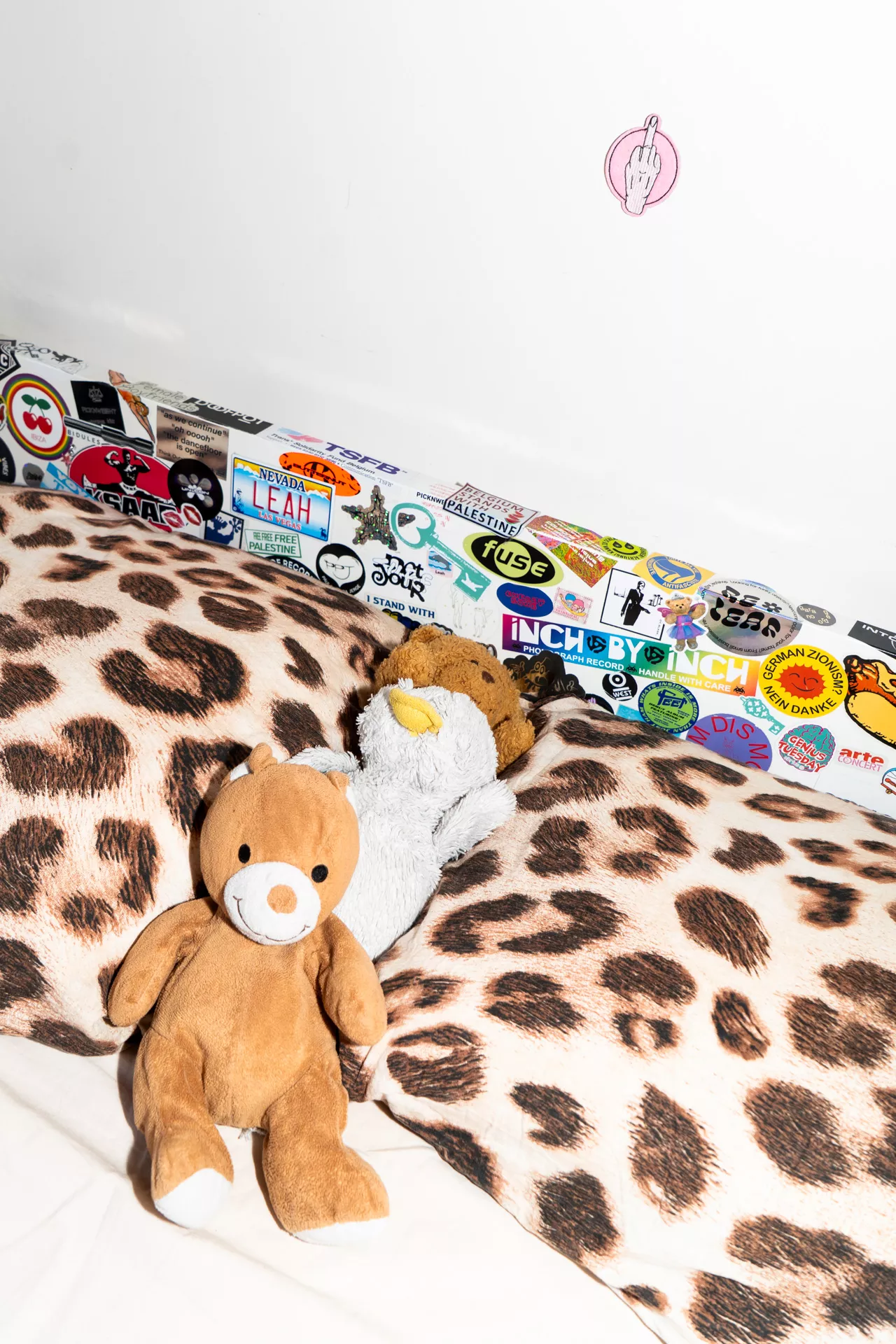


This broad interest in music also links to Cherry Bomb, the collective and party-series you're running, do you feel like this is the culmination of all your musical tastes maybe?
Leah: I’ve always had this feeling that the reason why techno, punk and rock exist is quite linked. These are all genres linked to revolution or resistance in their own sense. So to me energy-wise and vibe-wise it just makes sense to put these together, especially in these times where fascism is taking over everything. During my internship at Botanique I really observed each genre having its own crowd. This also made me sad in a way, to see people being split-up, so I wanted to create something for people like me who like different genres. The whole idea behind Cherry Bomb is to expose people, including your friends, to music they wouldn’t usually listen to. This is also a way to get them to understand what you like but also what you don’t like musically. .
I also wanted to make sure that if you are at Cherry Bomb and the music at one point is not entirely your thing you have something else to do, you have people to meet, you have space to breathe. We also love creating these random interactions with games and the people that play them, they create this bond, however stupid that may be for me it really emphasises that life is a simulation. We're all gonna die and life is already fucked, so please be stupid and socialise with other people, or let some parts of yourself looser that in real life. That’s the point of the nightlife in my opinion.
I saw that you recently did a call for volunteers to join the project and a lot of people did: to me that sounds like it could become ‘chaos’ quite quickly: how do you manage this?
Leah: We did our Halloween edition “9 to 5: The Nightmare Continues” last year, which was amazing because people really made the space their own and it just felt so special. But this meant we would have to involve new people because the whole project it’s quite ambitious. So we put out an open call a while ago and now we have 25 people in the collective that work together.
After the open call we invited a lot of people to join and they are all divided into different topics like music programme, scenography, care-team, zine and many more. Our first meeting was quite funny because I didn’t really know how to organise this meeting without making it feel like some corporate thing. But we quickly found a way to do it and now it’s great not to have to come up with ideas all by myself, but to really share it with others and have them take ownership of the concept as well. We’re still learning and for the last edition we didn’t have a lot of time to come up with the main theme so I thought of it myself at home and presented it to everyone. This was a nice way of working as well as everyone just took this theme and really did their own thing with it.

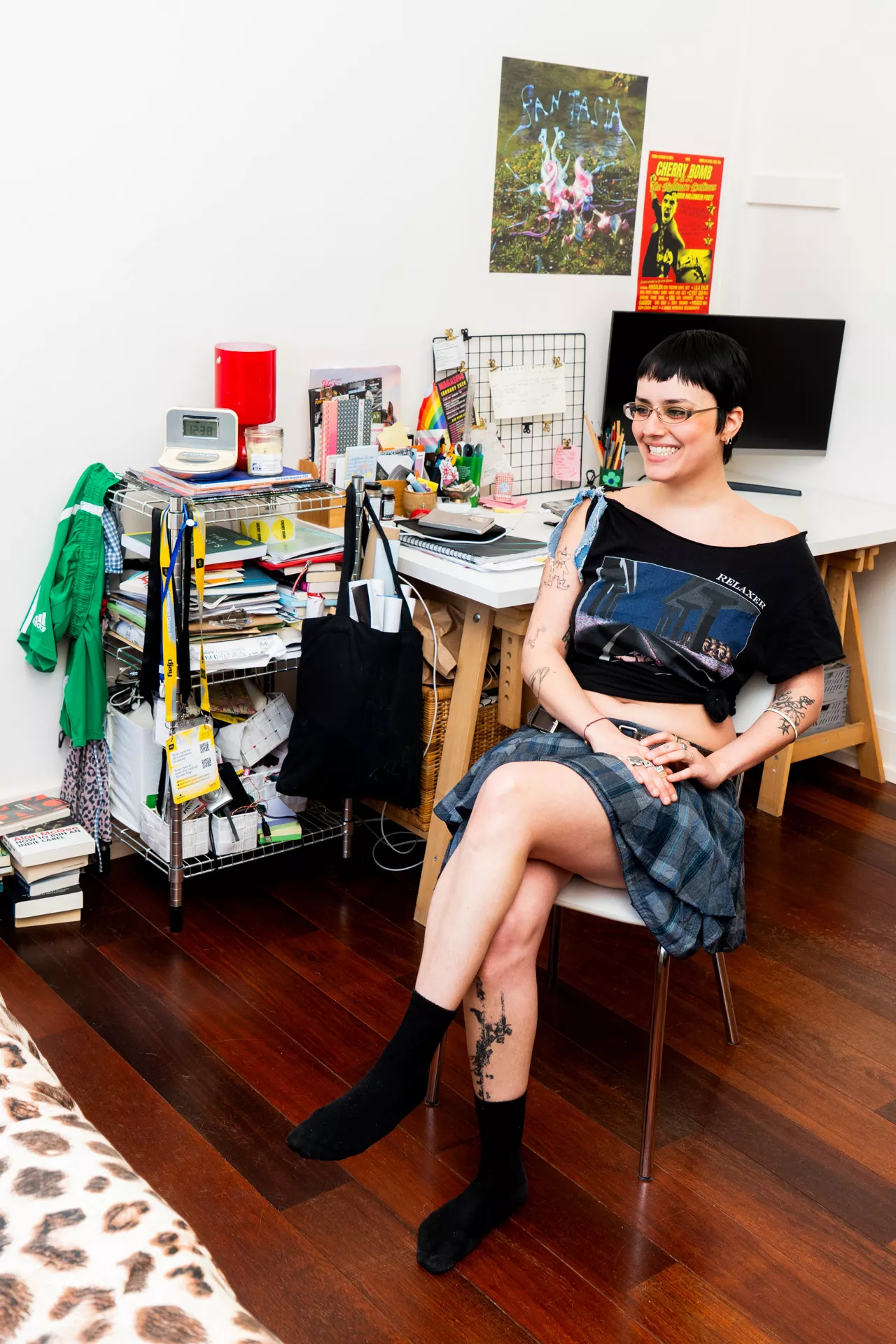
How difficult is it to run an independent party in 2026?
Leah: I’ve always been privileged to have some financial support for my studies from my grand-parents: this allowed me to work student jobs and to set some money aside. So I didn’t know what to do with this as it is not a common thing to have savings aside so young. I decided that if I wasn’t spending it on this dream I had, then nobody would and that was a good enough reason for me to go for it. Of course it’s still stressful to put your own money out there and risk it all for a party but that’s just part of the game if you want to throw an independent party. I would love that we would be able to pay everybody for all the work they do because people sacrifice something else to be part of this of course. It’s about managing expectations as well and maybe some people will quit or the whole thing will collapse after a while but that’s just the way it is. We might fuck-up but at least we’ll learn from our mistakes and have fun doing it.
At the moment the collective still seems to expect that I have the last word on things, or maybe more a responsibility, but the end goal for me would be not to have this last word and it really becomes a collective thing.
With The [W]hole you also run an agency: you already mentioned you select people based on their passion and their art: Has breaking through as a local DJ/artist become harder or easier in the digital age according to you?
Leah: Breaking through has become harder if you don’t follow the musical trends. Hot take maybe, but I truly believe that upcoming DJ’s shouldn’t strive for DJ’ing to be their main job. Striving for this really puts a lot of pressure on you as a person but also on this industry that is already struggling. For me it still very much boils down to the question if you want to be an artist or you wanna be just another DJ? Do you wanna be a star or do you wanna pursue your art… To me this is also why this scene has become shit in a way in recent years: DJ’ing needs to be more than just putting on tunes, it’s about taking risks.
Taking risks as a DJ also adheres to the financial side. You’ll have to be uncomfortable sometimes but consistency is more key than ever. Having a good group of friends/family around you really helps in persisting though: it's this network that will get you through the times where you are struggling or doubting. The main thing for me with The [W]hole as an agency was to build a network strong enough to support DJ’s that I personally really care about artistically.

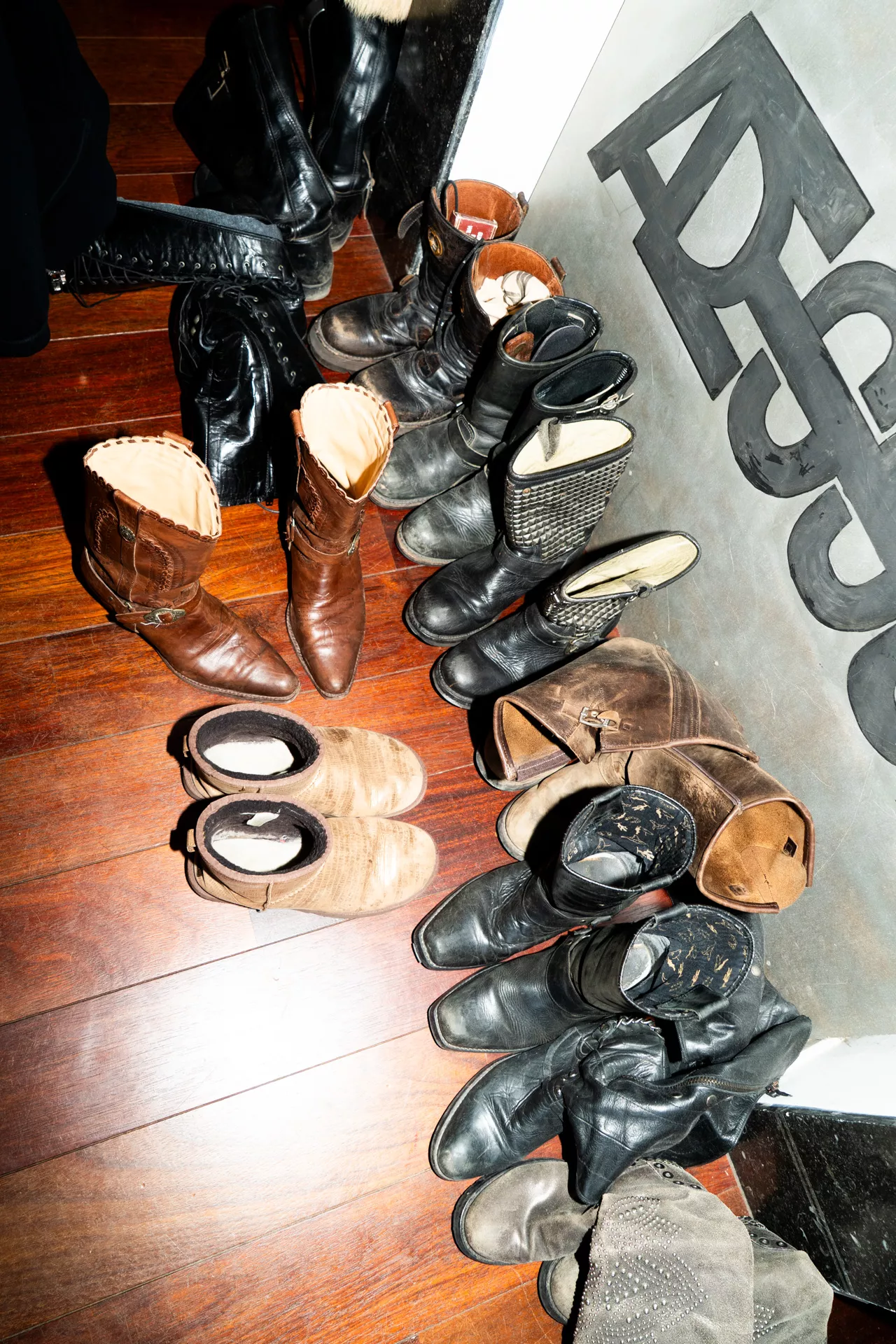

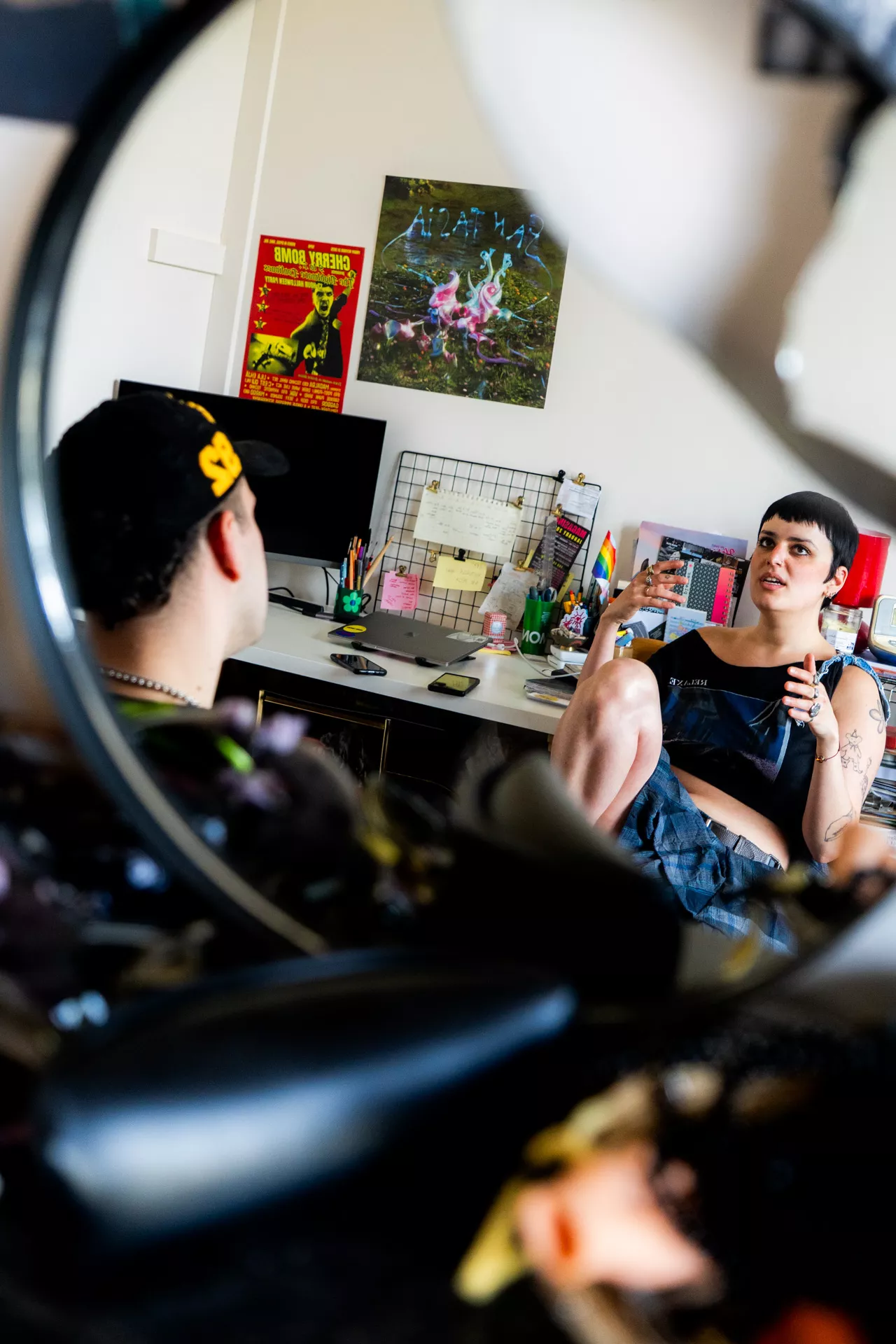


You also have your Podcast “Backstage Chat: Unfiltered” on Gimic? Do you like being backstage?
Leah Great question: I liked it in the first few years when I was in this scene because you meet a lot of great people and you get to see and hear how the industry works in real time. I like the sociological process of these spaces and the conversations you can have there. You can get comfortable talking to a person really easily in this environment.
Club backstages can be a very nice place for a person like me because I can take a break from being in the crowd if the club doesn’t provide other stimuli-free zones. But you also get sucked up by the backstage so easily: a new friend enters or somebody else you haven’t met before but find truly interesting, all these micro-serotonin boosts are addictive as well. Before you know it you’ve spent half of the evening backstage. So I also like it when at Cherry Bomb the backstage is empty and the crew can use it as a space to rest or the artists can focus and chill.
There is however still very much a topic that I feel isn’t talked about enough: being backstage pushes you to do drugs. It’s not a nice place to be when you are struggling with addiction.
Switching it back to the other side of the backstage door: Has the audience become too spoiled with high expectations of parties and less will to participate themselves?
Leah For me the key lies in the sentence “If you want to experience freedom, other people should be having this freedom too”. When I organise a party, I'm always thinking about the person with the least privileges in their life, whether it's physical, based on their ethnicity, gender affirmation or anything else: I need them to be able to feel good. I think at the end of the day, nightlife has always been about community, and we should be more aware of the impact we have on others while going out. It might be someone else’s first party or first real moment of connection on the dance floor, and that matters. But that sense of community has gotten a bit lost, especially when everything is tied to money and coolness. People start treating it like something to consume instead of something to contribute to. Of course we all have our own expectations. For me this translates to being able to be in my own bubble, to have access to water, a bathroom, some room to sit et cetera. These are all things that I feel like are the bare minimum as well.
What really frustrates me is the entitlement—when people who can afford it still ask for guestlist, especially for collective events where a lot of hard work goes into making it happen. If you’re part of the scene, you should support it, whether that’s by paying, showing up properly, or bringing energy to the space. For me, it’s about this exchange: if you get something, you should also give something back. You don’t have the money at the moment: That’s fine but please bring the energy on the dancefloor. Don’t pull out your instagram dm’s at the front row disturbing the others.
What can we wish for you in the future?
Leah: It would be great to speak Flemish so I can start working at a concert venue like AB as a booker. For a while AB was a dream to me that got crushed through me not being interested in the language while at school. I would really love working more with live scenes around rock, indie, and such.
But on another note: I’ve been thinking about applying to a drama conservatory because theater used to make me genuinely happy, and I miss that. At the same time, I still care about the artists I work with and want to support their growth in a way that feels sustainable and good for them. I also want to keep building spaces like Cherry Bomb where different kinds of people can meet and connect, while giving myself more time to actually explore my own creativity. Just in general figuring out what I want to do without turning it into another pressure or goal.
At a deeper level, I’m not quite sure where I want to live or what my long-term place in the scene is. I don’t think Brussels is my final destination, but I also don’t know where else I belong. I’ve considered places like Berlin, but my experiences there made me realize how easily I could lose myself in unhealthy patterns, especially around nightlife and substance use. That made me more aware of my limits and the need to protect my mental and physical well-being. In the long run, I even see myself stepping away from nightlife altogether, hoping that new people will take over and create what I no longer can, while I focus on living in a way that feels more balanced and true to myself. I want to move away from a purely business-driven path and reconnect with something more creative and meaningful.

