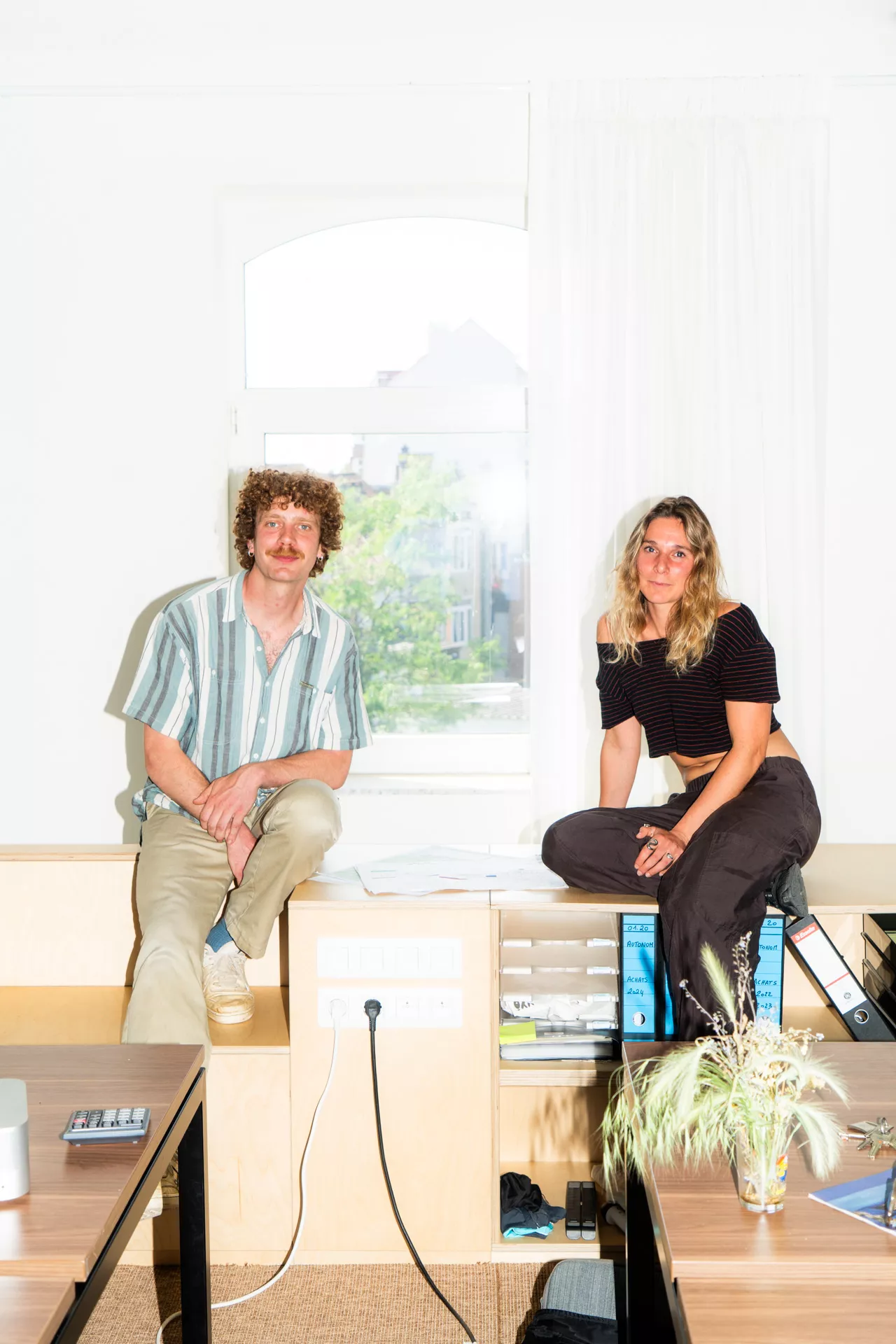
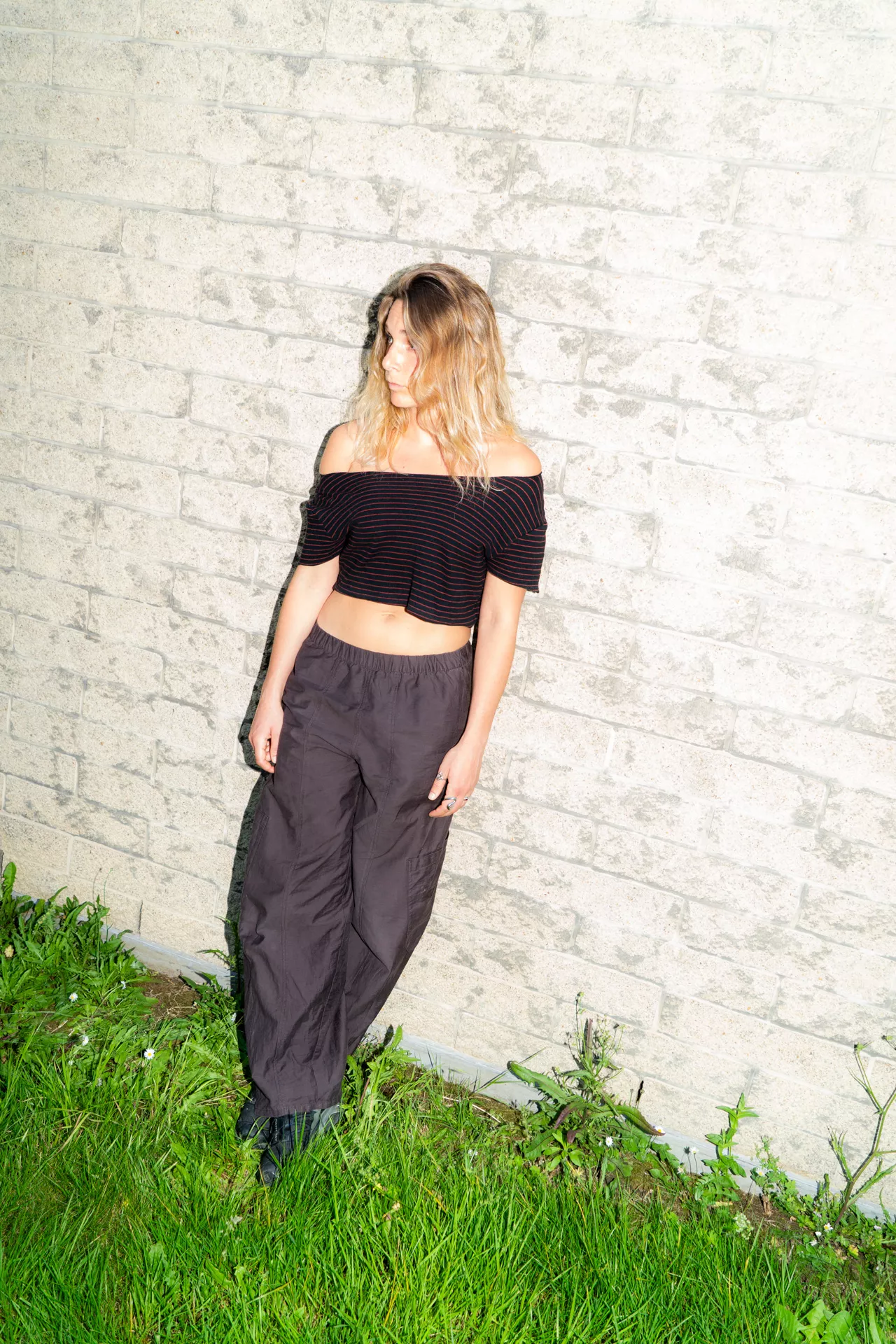
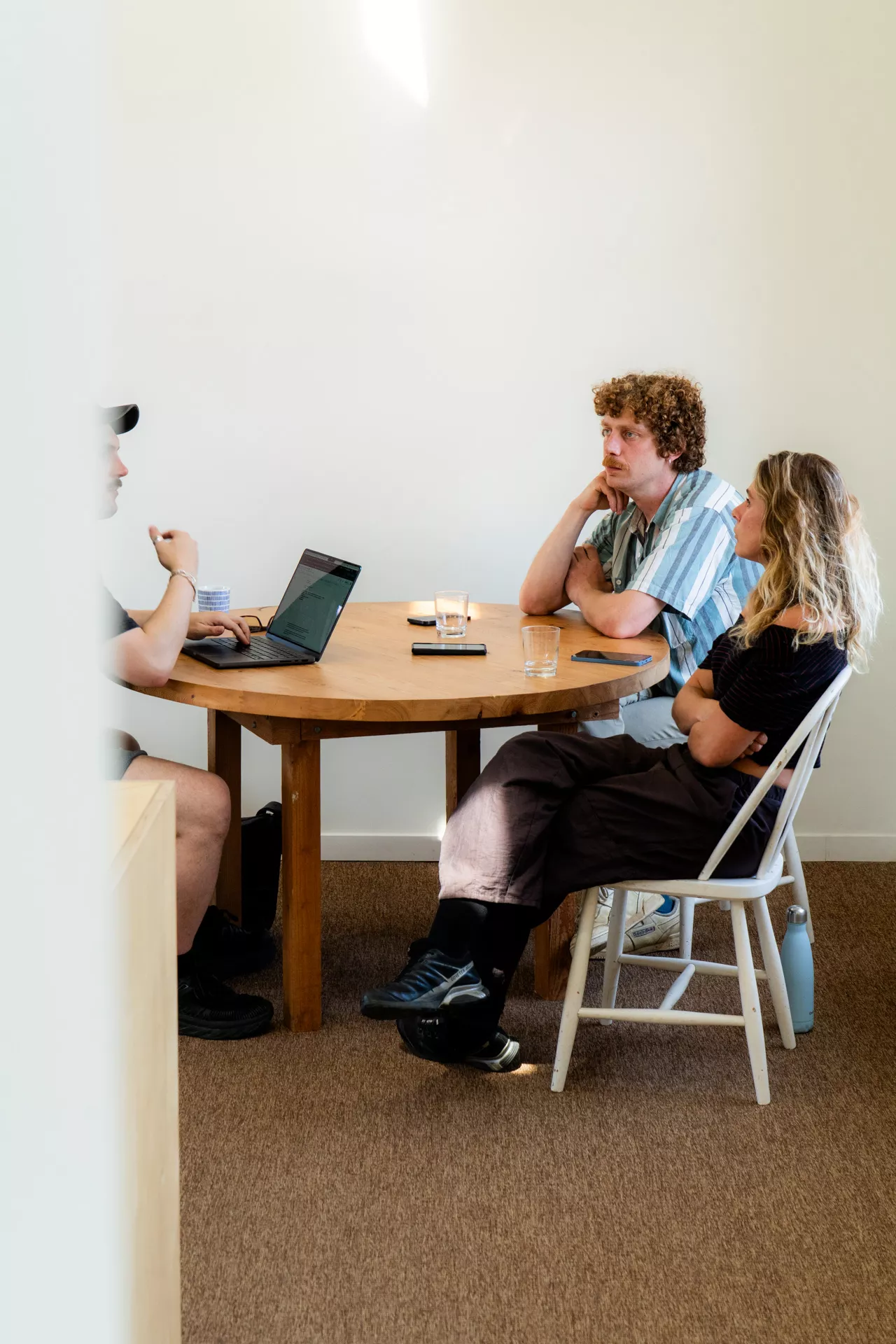
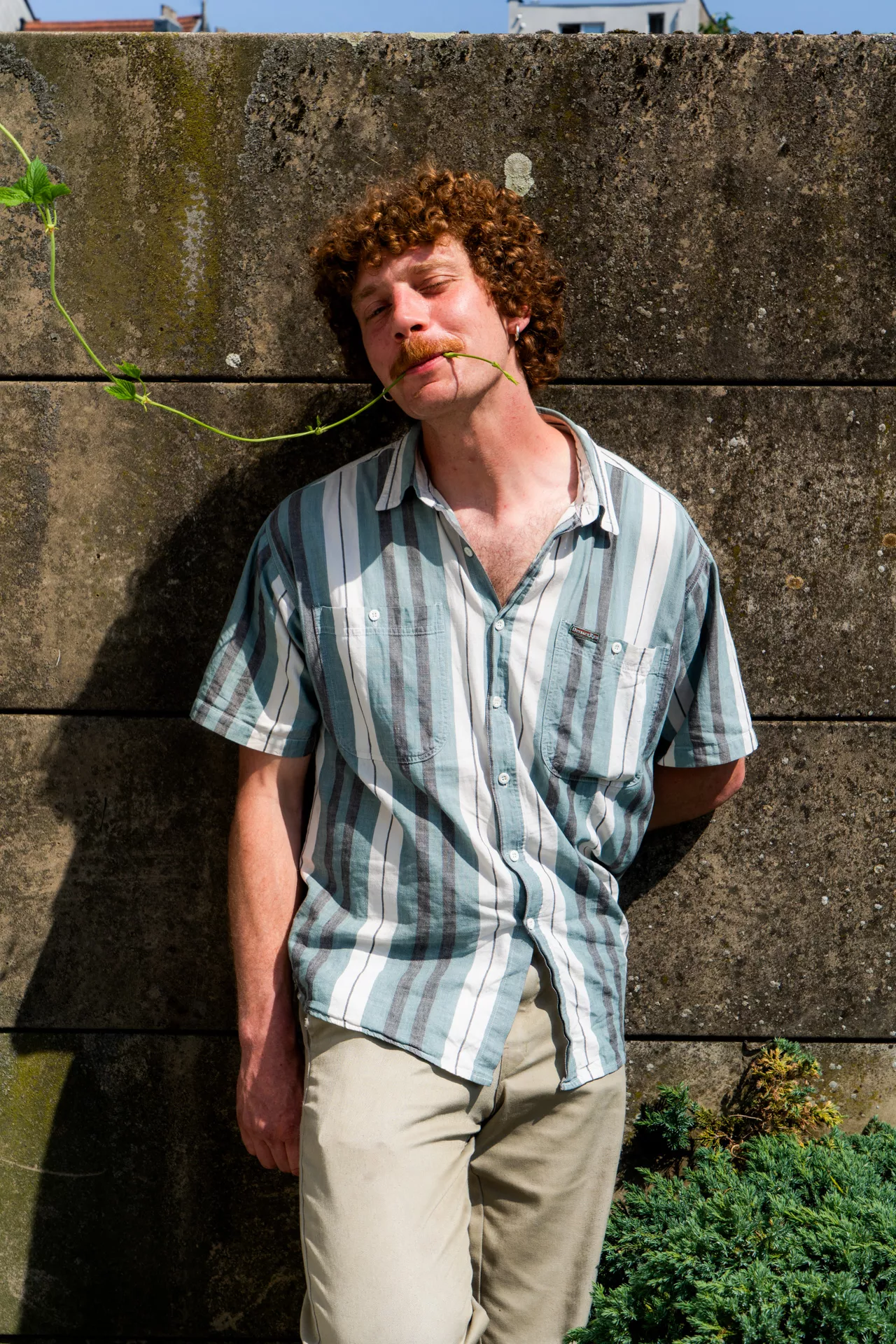
We all know what happens in the DJ-booth and on the dancefloor. One could argue that setting-up these exact elements is a super essential element of nightlife and festivals. And yet the production teams that build our booths and dancefloors are seldom recognised for their work. Time for a talk with Isea and Arthur from Autonom, the company that makes Listen (and many other events) possible.


Let’s start with the basics: For those who don’t know you, what is Autonom?
Arthur: Autonom is an event production company primarily dedicated to concerts and electronic music events in urban environments. The company was founded about three years ago. It actually evolved from my own personal activity, as I was already working as a freelancer in event producer before that. Three years ago, the company was officially created.
Today, we're a team of three. Isea joined very early on as we had already been working together before Autonom existed, and she became part of the company as soon as it was founded. Then, almost a year ago, Julien joined the team. So now we're three full-time team members, and at certain times of the year we also work with an intern to help us on larger projects.
At what point did you decide to professionalize and create Autonom?
Arthur: I was a DJ as a teenager, and I produced electronic music with my brother and two friends. Over time, we started playing at events. I remember my older sister asking me to help organize her sixteenth birthday party, for example. Through music and music production, we spent more and more time around events. Eventually, together with my friend Dorian, we started organizing our own events and launched a series called Under My Garage. From there, we also created Les Garages Numériques, a festival combining exhibitions, performances, digital arts, and nightlife events. That eventually led us to start working for other event organizers. At the time, Brussels Major Events asked us to manage the nightlife programming for the Bruxelles les Bains festival. That was my first major professional experience.
From that point on, we gradually started producing events for other people. Without really realizing it, I found myself more and more involved in event production, and I discovered that I genuinely loved it.
Isea: I've always wanted to work in music and as a student I worked at Jalousy and other venues. I'm also part of the Breaxx collective and I’m the co-founder of Bellbird, a micro-festival, which also enables me to be creatively involved in the sector. Over time, I realized that production was the aspect I enjoyed most because it allows you to turn creative ideas into reality. That's the part that speaks to me the most, it was really through working with Arthur that I realized production was where everything made the most sense for me.
How do you find the balance between production requirements and the artistic side of an event?
Arthur: I think that's really at the core of everything we do. I often say that "event production" is a term that means both everything and nothing. It's a convenient way to explain our job, but in reality our role is to act as the central point connecting everyone involved in a project. We're in contact with artistic programmers, artists, technicians, stage crews, security teams, and many others. We become the central axis that transforms an idea into a real event. What I love about this job is that it allows us to learn about and participate in every aspect of the project from a central position.
What's particularly interesting about event production is that the framework itself is never really fixed. Our role is to understand everything that's happening, coordinate all the different departments, and make sure everyone's goals and ambitions can coexist. It's about making all those interests meet while also knowing where to draw boundaries.



It takes a certain type of person to work in this industry, doesn't it? In your opinion, what qualities are essential to succeed in this environment?
Isea: I think stress management is one of the most important qualities. This is a profession that comes with a lot of pressure, especially because of strict deadlines. That being said, I don't think there's one specific personality type suited to this work. Within our team, we have very different personalities, yet we all do the same job. Empathy is absolutely essential. You need to understand what's important for everyone involved in a project. You also need to put yourself in the audience's shoes. You have to imagine their entire experience.
Arthur: Stress management is definitely the number one requirement as Isea said: You can spend months, or even an entire year, preparing an event that only lasts a few hours. We try to anticipate everything, but eventually our job becomes one of solving problems. You need to be highly organized beforehand while remaining flexible enough to adapt when things don't go according to plan. You need to accept that the framework you've built can evolve or even completely fall apart. That's where resilience becomes crucial. There's one deadline that never moves: opening time. When the doors open, the event has to work.
Isea: There's a strong contrast in the way we work. On one hand, we spend months anticipating everything and creating detailed structures. On the other hand, as soon as the doors open, we have to let go to some extent.
Arthur: There's also a very important human dimension. Our job often consists of giving other people the tools and conditions they need to do their jobs properly. We work with technicians, specialists, and experts in many different fields. You have to trust them.
Isea: And because we work with so many different professions, curiosity is incredibly important. We're constantly collaborating with people who have much deeper expertise than we do in their respective fields. We need to understand their language, constraints, and challenges without necessarily becoming experts ourselves. That curiosity allows us to better coordinate all the different parts of an event and understand how each one contributes to the overall experience.
Arthur: I also think you need to leave your ego at the door. This industry involves a lot of pressure and, sometimes, a lot of ego. But ultimately, the objective remains the same: making sure the event happens under the best possible conditions.It doesn't matter who was right or wrong, or what adjustments had to be made along the way. What matters is the final result.
Isea: Exactly. This is a very results-oriented profession. Regardless of the path taken or the obstacles encountered, what ultimately matters is the experience lived by the audience and by everyone who contributed to the project.
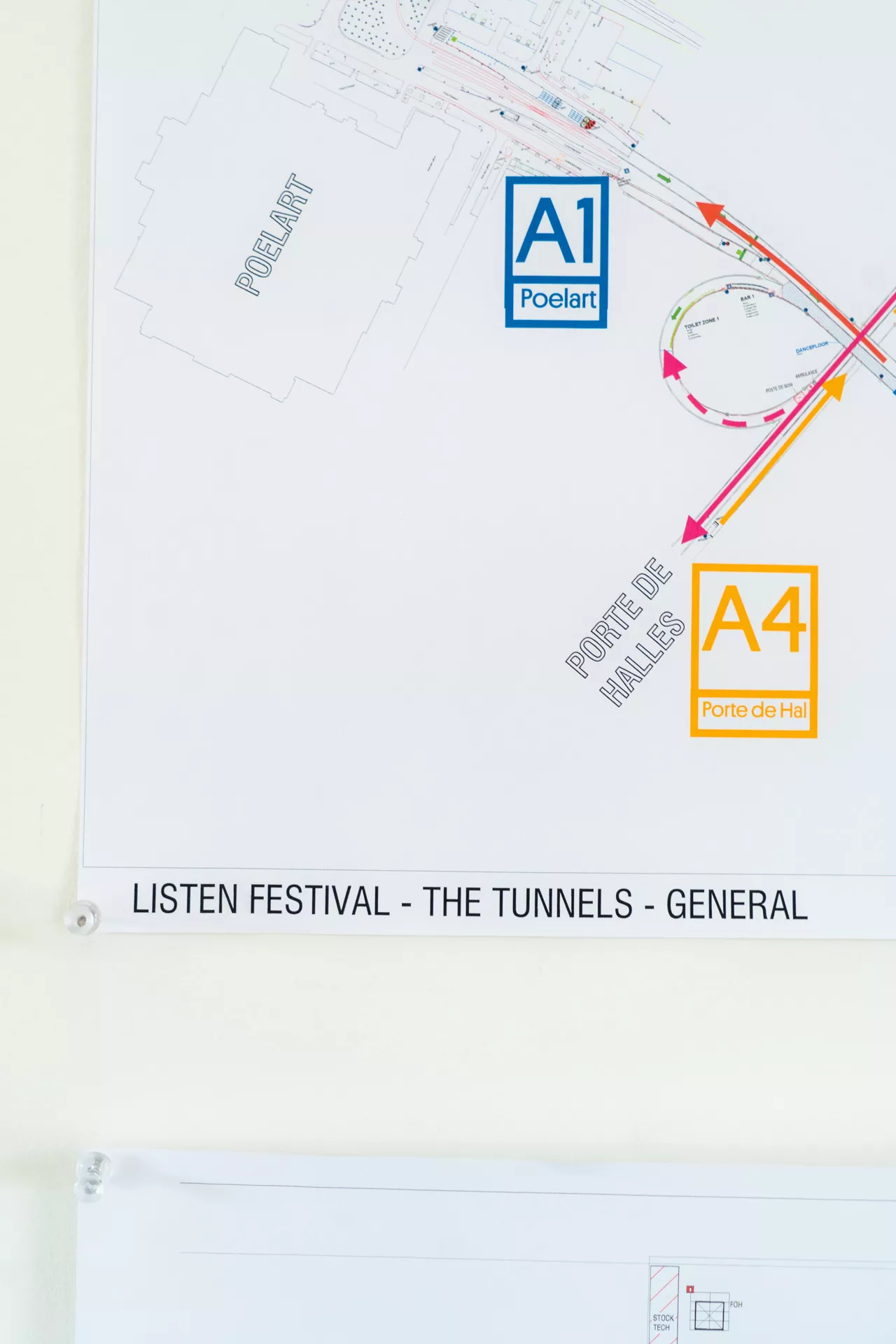
You have worked on large-scale productions and festivals in highly unusual venues. How do you go about producing an event like The Tunnels (inside the Cinquantenaire tunnel), for example?
Arthur: First of all, you need to work with the right people. These projects often start with an idea that sounds a little crazy. Someone says, “What if we organized a rave inside the tunnels?” At first, there’s excitement around the concept, but very quickly the question becomes: how do we actually make this happen?
The first step, especially when working in public space, is determining whether the project is administratively feasible. For us, that means a great deal of coordination with public authorities and in Belgium, that is rarely straightforward. In the case of the tunnels, for example, we have to work with the City of Brussels, Brussels Mobility, and sometimes additional regional or federal authorities depending on the location.
Before we even start thinking about programming or technical production, we need to obtain preliminary approval and make sure the event can realistically take place. Once we have a reasonable indication that the project is possible, we begin understanding the venue itself. We conduct site visits, gather plans, and define layouts. That becomes the skeleton of the event. From there, the other departments can start working: music programming, technical production, design, communications, and budgeting. We can then refine costs and move forward more concretely. In practice, things almost never happen in the ideal order. We rarely have the luxury of waiting until everything is fully approved before moving ahead. Communication campaigns often begin while permits are still being processed because every department has its own deadlines.
The challenge is that constraints sometimes emerge later in the process, forcing us to adapt plans that have already been announced. And you cannot always turn back. For example, you cannot wait until two weeks before an event to confirm an artist. That is where managing pressure becomes essential.
Isea: Every department operates on a different timeline.It becomes a giant game of Tetris, trying to align all of these timelines. Sometimes we are faced with requirements that are simply unrealistic. Part of our job is translating those constraints into something that works in practice and asking each stakeholder to make adjustments where necessary.
Arthur: It is also important to remember that, ultimately, we work for clients. Our goal is not only to make sure the event runs smoothly but also that our clients are satisfied. One of the unique aspects of our sector is that we often work with passionate organizers whom we have known for years. These are not necessarily large companies outsourcing an event to an agency. In many cases, the event is their personal project, their baby. They invest enormous amounts of time and energy into it and often take significant financial risks to make it happen.

We hear a lot about rising costs for festivals and promoters. How does this affect you? Have you noticed your clients struggling with it?
Isea: Absolutely. The cost of living is increasing and production costs are increasing as well. And because an event relies on so many different trades, suppliers, and service providers, even a small disruption somewhere in the supply chain can have a direct impact on a festival’s budget.
Even with only a few years of experience behind me, I can already see the difference: Prices are rising across the board. The difficult part is that promoters cannot recuperate these extra costs with a rise in ticket prices. They need to absorb a part of these costs and this in turn reduces the margins and creates a more fragile financial equilibrium.
Arthur: Several factors are piling up at the same time. First, for many of the projects we work on, public funding is becoming increasingly difficult to secure. For some events, those subsidies represent a significant portion of the budget. When they are reduced or disappear altogether, it has an immediate impact on what can realistically be achieved.
At the same time, prices are increasing everywhere. Fortunately, we often work with the same suppliers across multiple projects. Thanks to those long-term relationships and the volume of work we share, we can sometimes avoid the most dramatic price increases.
Another factor that is becoming increasingly significant is artist fees. Today, certain artists have become major ticket-selling machines. Organizers need them to sell tickets, which creates a kind of bidding war. We sometimes see organizers booking artists very far in advance because they believe those names are essential to the event’s success, even before they have a clear understanding of their overall budget. Later, they realize the cost is much harder to absorb than expected. That is where tensions emerge.
On one side, we are negotiating every expense, looking for savings everywhere, and asking suppliers and teams to make concessions. On the other side, an artist may be earning tens of thousands of euros for a one- or two-hour performance. That gap is becoming increasingly visible. It is not tied to any particular client, we see it across many different projects.
We have seen elements such as care teams and safer spaces become increasingly important in the sector. Are there other aspects that have gained importance in recent years?
Isea: Today, events are also expected to fulfill new responsibilities, and in many cases, that is a very positive development. For example, everything related to care initiatives, safer spaces, and the support of people who have experienced sexist, sexual, or discriminatory violence. For us, these measures are completely justified, and we quickly integrated these concerns into the way we work. However, they also come with additional costs. Beyond the financial aspect, they introduce a new role within event teams. When no additional budget is allocated, it simply becomes another task added to their workload.
What is striking is that a few years ago, these initiatives often benefited from a certain level of public support. Today, they have sometimes become mandatory requirements within event permit applications, but with less financial support than before. Organizers are expected to implement these measures, which is perfectly reasonable, but the necessary resources do not always follow. It would also be problematic to present care-related initiatives as an additional cost that attendees should pay for through their ticket. That would almost imply that feeling safe at an event is an optional service that comes at an extra charge.
Arthur: In the end, it is always the participant who finances the event. Apart from public subsidies, which are becoming increasingly rare, the money essentially comes from ticket sales and on-site consumption. All additional costs for things like a care-team are therefore absorbed, in one way or another, into the overall economics of the event. And if a project loses money edition after edition, it will eventually disappear. The real question is understanding what attendees are willing to pay for and how to maintain a sustainable balance.
I have often had discussions with friends who think certain events are too expensive. But when they attend much cheaper events, they sometimes realize for themselves that there is no care-team, the sound quality is poorer, there are not enough toilets, or the overall conditions are less comfortable. What can be frustrating is that organizers and production teams are often perceived as the ones making all the money, as if the events industry automatically generates huge profits. In reality, we deal with extremely tight budgets on a daily basis. I think many people underestimate what it actually costs to organize an event today.



Do you think this level of event production is sustainable in Belgium? Where do you see the sector, and your company, in five years?
Arthur: My perception of the industry may be somewhat biased because many of the projects we support are experiencing growth. I frequently hear people talk about the difficulties facing the sector, but in our day-to-day work, I do not yet feel that crisis directly.
Isea: I do feel that there is a form of polarization. Either we work with projects that are booming and continue to grow, or with projects that are struggling significantly more.
Arthur: That's possible. I do have the impression that more and more events are starting to look alike. There seems to be a competition based on the same criteria: who has the biggest artist, the largest stage design, the biggest budget. And naturally, to compete on that level, you either need substantial resources or you need to be part of an already established organization.
I feel this is pushing many events toward a certain level of homogenization. Historically, Belgian festivals often had very strong identities. People attended a particular festival to experience something unique, discover a specific program, or immerse themselves in a distinctive atmosphere.
Isea: I also think another dynamic is emerging, particularly among smaller festivals. Many of them are not necessarily trying to attract the largest crowds or book the most expensive artists. Instead, they are building their identity around the experience they offer their audience, often with volunteer teams or people who are primarily driven by passion. That is why I believe events that are not solely built around their line-up still have an important place. Personally, artists may spark my interest or motivate me to discover an event, but they are not the sole reason I attend. What truly stays with me is the overall experience.
What is the biggest stress you have ever experienced during an event?
Arthur: There have been many, but the one that immediately comes to mind is FCKNYE 2022. That was the first year the event truly changed scale. We went from a capacity of around 17,000 to more than 30,000 people, including large outdoor tents. With this kind of structure, there is a wind threshold beyond which it is simply impossible to open to the public. A few hours before opening, we were only two or three kilometers per hour away from reaching that limit. We were eventually able to open, but after two hours of operation, we noticed that a tarp on one of the tents had started to tear. The first question was: what is going to happen in the next few hours? Do we need to evacuate? Can we continue? Fortunately, the tear was stabilized and the event continued as normal.
Isea: For me, the most striking memory is linked to the same event, but from the 2025 edition: At the moment of the New Year countdown, we were up high with the team, looking at the main stage. It is a space that can hold 15,000 people. Everyone was moving toward that stage for the countdown, with the light show and all the New Year staging. At one point, I looked at that enormous crowd and experienced what I would call a real “crowd vertigo.” Everything was going perfectly well, but I had a very simple thought: “What have we done?” Seeing tens of thousands of people gathered in a space we had helped create was both fascinating and extremely overwhelming.
With all that being said: What do you like the most about this job?
Arthur: For me, the greatest achievement is a moment that repeats itself on almost every project. My favorite moment is when the majority of the audience has entered the site and I can watch people enjoying what we have built. At that stage, the major risks are behind us, the pressure drops, and we finally see the result of months of work.
It is often a very emotional moment. I have had moments where I had tears in my eyes watching an event work and seeing thousands of people having a good time in a space that did not exist just a few days earlier. What is somewhat paradoxical is that before reaching that moment, we often go through periods of extreme stress and exhaustion. I have several times told myself: “This is the last event I’m ever doing.” And then that moment arrives when everything works, the audience is there, and all the fatigue disappears almost instantly. That is probably what makes this job so addictive.
Isea: We sometimes spend a year preparing something that will only exist for a few hours or a few days. Then, overnight, everything disappears. The structures are dismantled, the site returns to its original state, as if nothing had ever happened.The only thing that remains are the memories. That is why I like to say that we are, in a way, creators of memories. We create the conditions for people to meet, to experience things together, and to leave with something that will stay with them for a long time.
Arthur: That is also what sets events apart from other forms of creation. A film can be watched hundreds of times. A song can be listened to endlessly. An event, on the other hand, only exists in a single moment. Even when it is filmed or photographed, the real experience remains unique. No edition is ever exactly the same as the previous one. It is this ephemeral nature that makes each project special and gives meaning to all the work done beforehand.
Isea: And ultimately, if participants do not notice everything that is happening behind the scenes, it usually means the job has been done well.